BPC-157 Reconstitution & Dosage Calculator
This free BPC-157 calculator turns your vial size, the bacteriostatic water you add, and your target amount into a concentration, a draw volume, and the exact units on a U-100 insulin syringe. BPC-157 amounts are usually in the microgram range, so a fine-scale syringe helps — the calculator handles the mcg-to-units math for you.
BPC-157 reconstitution calculator
Syringe
U-100 insulinPeptide in vial
Target amount
Bacteriostatic water
Email this result to yourself
Quick summary
- Converts vial size (mg), bacteriostatic water (mL), and a microgram or milligram amount into concentration, draw volume, and U-100 units.
- Built for the small microgram amounts BPC-157 is studied at, with reference math for 5 and 10 mg research vials.
- Educational measurement tool only — it does not diagnose, treat, or recommend an amount.
What this BPC-157 calculator does
This calculator does one job well: it turns your vial size, the amount of bacteriostatic water you add, and your target amount into a concentration (mg/mL), a draw volume (mL), and the matching units on a U-100 insulin syringe. Change any input and the result updates instantly.
BPC-157 ships as a freeze-dried powder. Before it can be measured into a syringe it has to be reconstituted — dissolved in bacteriostatic water. How much water you add sets the concentration, and the concentration sets how many units each amount works out to. The presets above cover the most common BPC-157 vial setups; use the custom fields for anything else.
How to use the BPC-157 calculator
Pick your syringe
Choose the U-100 insulin syringe you'll draw with. Smaller syringes (0.3 mL / 30u) have finer lines, which helps when the draw is small.
Enter your vial and water
Set the milligrams in your BPC-157 vial and the bacteriostatic water you added. Together these set the concentration.
Set your target amount
Toggle mg or mcg and pick (or type) the amount you're measuring for. The calculator does the conversion for you.
Read the draw
The result panel shows concentration, draw volume, and the exact U-100 units to pull, plus how many doses your vial contains.
BPC-157 reconstitution math, explained
The math is short. Concentration = vial size ÷ bacteriostatic water. Draw volume = target amount ÷ concentration. Units = draw volume × 100 (a U-100 syringe reads 100 units per mL). The table below shows common BPC-157 setups and the units for a 1 mg amount at each.
| Vial size | Bac water | Concentration | Units per 1 mg |
|---|---|---|---|
| 5 mg | 1.0 mL | 5 mg/mL | 20 units |
| 5 mg | 2.0 mL | 2.5 mg/mL | 40 units |
| 10 mg | 1.0 mL | 10 mg/mL | 10 units |
| 10 mg | 2.0 mL | 5 mg/mL | 20 units |
| 10 mg | 3.0 mL | 3.33 mg/mL | 30 units |
BPC-157 amount-to-units reference
How common amounts convert to U-100 syringe units at two example concentrations. These are arithmetic conversions for reference, not a recommendation of any amount.
| Amount | Volume (mL) | U-100 units |
|---|---|---|
| 100 mcg (0.1 mg) | 0.04 mL | 4 units |
| 250 mcg (0.25 mg) | 0.1 mL | 10 units |
| 500 mcg (0.5 mg) | 0.2 mL | 20 units |
| 750 mcg (0.75 mg) | 0.3 mL | 30 units |
| 1000 mcg (1 mg) | 0.4 mL | 40 units |
| Amount | Volume (mL) | U-100 units |
|---|---|---|
| 100 mcg (0.1 mg) | 0.02 mL | 2 units |
| 250 mcg (0.25 mg) | 0.05 mL | 5 units |
| 500 mcg (0.5 mg) | 0.1 mL | 10 units |
| 750 mcg (0.75 mg) | 0.15 mL | 15 units |
| 1000 mcg (1 mg) | 0.2 mL | 20 units |
Mixing, color & storage tips
A clear, colorless solution
BPC-157 is a white lyophilized powder that reconstitutes to a clear, colorless liquid. Cloudiness, particles, or discoloration are reasons to discard the vial.
mcg vs mg
BPC-157 amounts are small, so they are usually written in micrograms. 1 mg = 1000 mcg, so a 250 mcg amount and a 0.25 mg amount are identical. Toggle the unit to match your reference.
Use a fine syringe
Because the draws are small, a 0.3 mL (30-unit) insulin syringe with finer graduations makes low microgram amounts easier to read accurately than a 1 mL barrel.
Storage
Keep the dry powder cold and dark. After reconstitution, store the vial refrigerated, out of light, and plan around a limited usable window. Do not freeze a reconstituted vial.
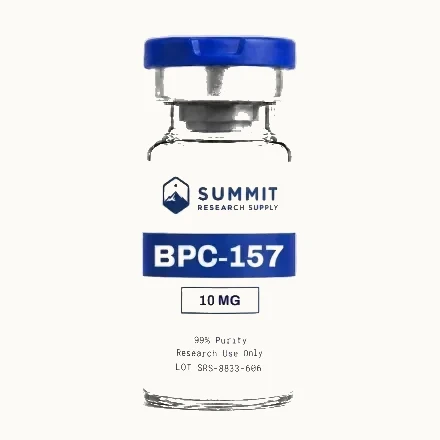
BPC-157 supplies checklist
A simple reconstitution shopping list. Confirm vial size and batch documentation before you buy.
BPC-157
- Batch COA on every vial
- Third-party purity tested
- U.S. fulfillment, discreet shipping
BPC-157 — frequently asked questions
What does this BPC-157 calculator tell me?
It converts your vial size, bacteriostatic water volume, and target amount into concentration (mg/mL), draw volume (mL), and U-100 syringe units. It is a measurement tool, not a recommendation.
Is the BPC-157 reconstitution calculator free?
Yes — free, browser-based, and no account required.
How much bacteriostatic water for a 10 mg BPC-157 vial?
It depends on the concentration you want. A 10 mg vial with 2 mL of bacteriostatic water makes 5 mg/mL. More water gives a larger, easier-to-read draw; less water gives a smaller one.
How many units is 250 mcg of BPC-157?
At 5 mg/mL it is 5 units (0.05 mL). At 2.5 mg/mL it is 10 units. Units always depend on your specific concentration, which is why the calculator asks for your exact vial and water.
What is the difference between mg and mcg?
They are the same measure at different scales: 1 mg = 1000 mcg. A 250 mcg entry and a 0.25 mg entry give an identical draw.
Is BPC-157 FDA-approved?
No. BPC-157 is sold as a research-use-only compound and is not an FDA-approved drug.
Is this medical advice?
No. This page and calculator are for education and research planning only. Products referenced are sold strictly as research chemicals and are not for human or veterinary use.
Sources & further reading
Related calculators
BPC-157 protocol & evidence
There is no established human dosing schedule for BPC-157 — the published work is animal or cell-culture research. The protocol page explains what that work does and does not show.