Peptide research, explained
Plain-English, no-hype articles for handling research peptides correctly — reconstitution, bacteriostatic water, reading a COA, storage, and stacking.
Fundamentals
Start here. What these compounds are and how the basics work.
3 postsHow to Reconstitute a Peptide: A Step-by-Step Guide
Reconstitution is the single most common step in working with research peptides — and the one people get wrong most …
Read guide →Bacteriostatic Water for Peptides: What It Is and Why It Matters
Bacteriostatic water is the standard diluent for reconstituting research peptides — but it is easy to confuse with o…
Read guide →Peptide Storage & Handling: Keeping Vials Stable
Peptides are sensitive molecules, and how you store them has a real effect on stability. The rules differ depending …
Read guide →Measurement Basics
The arithmetic behind every draw — concentration, units, and syringes.
7 postsPeptide Half-Life Explained (and Why It Varies So Much)
Half-life comes up constantly in peptide research discussion and is frequently misused. It is a specific pharmacokin…
Read guide →Can You Mix Two Peptides in One Syringe?
This question comes up constantly, usually for convenience. It is worth separating three different things that get c…
Read guide →How Long Does a Peptide Vial Last? Draws, Volume and Storage
There are two separate questions hiding inside "how long does a vial last": how many draws the vial physically conta…
Read guide →What Is a Peptide? A Plain-English Primer
If you have arrived here without a biochemistry background, most explanations either patronise or drown you. This is…
Read guide →U-100 Syringe Units Explained: What "20 Units" Actually Means
Almost every peptide measurement question comes down to one conversion that nobody explains clearly: a "unit" on an …
Read guide →Peptide Concentration Explained: mg/mL Without the Guesswork
Concentration is the number that connects a vial to a syringe reading. Get it right and every other calculation foll…
Read guide →Syringe Sizes for Peptide Research: 0.3 vs 0.5 vs 1 mL
All U-100 insulin syringes use the same unit scale, but they come in different barrel sizes — and the size you choos…
Read guide →Handling & Storage
Keeping reconstituted material stable, clean, and correctly labelled.
3 postsCloudy Peptide Solution? What It Means and What To Check
You add bacteriostatic water and the solution does not go clear. Some appearances are completely expected, some indi…
Read guide →Bacteriostatic vs Sterile Water: Which One and Why
These two diluents look identical in the vial and are constantly confused, but they behave very differently once a v…
Read guide →8 Peptide Reconstitution Mistakes (and How to Avoid Them)
Most reconstitution problems are not exotic. They come from a short list of recurring errors, and nearly all of them…
Read guide →Quality & Sourcing
Reading the paperwork and telling documented suppliers from risky ones.
1 postSafety & Standards
Evidence, regulation, and what "research use only" actually means.
5 postsPeptide Evidence Tiers: What Has Actually Been Studied in Humans
Almost every peptide gets discussed with the same confident tone online, as though the evidence behind them were com…
Read guide →How to Read a Peptide Vial Label
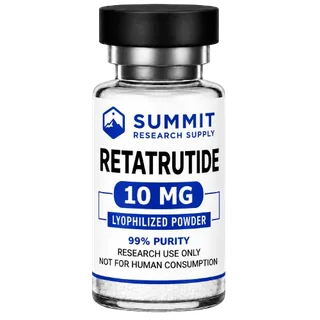
A research peptide label carries less information than most people assume, and one of the numbers on it means someth…
Read guide →Peptide Purity Explained: What "99%" Actually Means
Almost every listing quotes a purity figure, usually 98% or 99%, and almost nobody explains what the number measures…
Read guide →How PepGuru Vets Suppliers & Builds Its Tools
PepGuru is a free research-tools and reference hub. This page explains, in plain terms, how we build the calculators…
Read guide →Research Peptides & the Law: RUO, Labeling & COAs
If you have looked at research peptides, you have seen the phrases "research use only," "not for human consumption,"…
Read guide →Compound Roundups
How specific compounds compare for common research goals.
6 postsResearch Peptides Studied for Muscle & Body Composition
Body composition is one of the most searched areas in peptide research and one of the most oversold. This roundup co…
Read guide →Semaglutide vs Tirzepatide vs Retatrutide: Mechanism Compared
These three are constantly compared and constantly conflated. The real difference is how many receptor pathways each…
Read guide →BPC-157 vs TB-500: How They Differ
These two are the most-studied standalone compounds in tissue-repair research and are frequently discussed — and sol…
Read guide →Best Research Peptides for Recovery & Repair
Recovery and tissue-repair is one of the most active areas of peptide research. This roundup summarizes the compound…
Read guide →Best Research Peptides for Fat Loss & Metabolic Research
The GLP-1 class has made metabolic research one of the fastest-moving areas in the field. This roundup summarizes th…
Read guide →Best Research Peptides for Skin, Collagen & Anti-Aging
Skin, collagen, and longevity is where copper peptides and several repair compounds overlap in the research literatu…
Read guide →Advanced
Multi-compound planning once the fundamentals are solid.
1 post